 0330 043 3634
  support@ukabove.co.uk
  Yorkshire & the North East
Advances in Drone Technology
Drones over the past decade have become widely used by the security services, hobbyists and first responders, whilst the range of available models has expanded rapidly. Once limited to small quadcopters with short battery life, drones now support search and rescue missions and deliver urgent medical supplies.
These developments raise important questions:
Are drones safe enough to fly in dense neighbourhoods and cities?
Does police drone surveillance at events or protests violate privacy?
Who decides how autonomous drones should be in a war zone?
These questions are no longer hypothetical. Advances in drone technology, lower prices, and relaxed regulations make drones cheaper, faster, and more capable. Here are four major changes coming soon.
Police Drones
Police pilots use drones for search and rescue, crowd monitoring and other operations.
Soon, police drones capable of flying up to 57 miles per hour may be authorised to travel miles from their take off points. They could respond to burglaries in progress or track drivers suspected of links to kidnappings. Their main advantage may be integration with tools such as automatic licence plate readers – ANPR and CCTV networks.
Drone Deliveries
Home drone delivery may be the most overhyped drone technology. For years, tech companies have shown futuristic images of drones dropping packages at doorsteps within hours of an order.
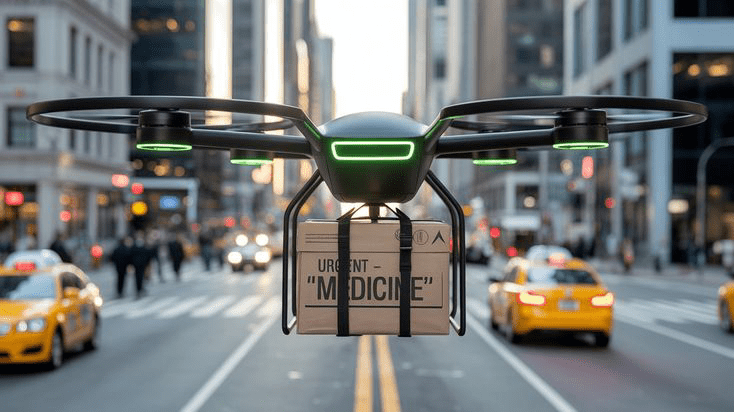
While drone package delivery is becoming more likely, medical delivery may be more valuable. Trials are exploring how drones can deliver vaccines, antivenom, organs, and blood to remote areas.
Domesticating the Drone Supply Chain
China is the undisputed leader in drone and drone-part manufacturing, with DJI making more than 90% of UK law enforcement drones.
The American Security Drone Act, signed into law last December, bars federal agencies in America from buying drones from countries seen as national security risks, including Russia and China. This is unlikely to affect private UK buyers such as videographers, drone racers, or hobbyists. However, if the UK adopted a similar approach, more domestic companies could bid to manufacture UK-made drones.
Autonomous Weapons in Ukraine
Since the war began, drones have been widely used to assess damage, track targets, and drop weapons. However, many quadcopters last only about three flights before being shot down or disabled by GPS jamming, so both Ukraine and Russia have focused on stockpiling large numbers of expendable drones.
Ukraine’s needs are shifting from simple commercial drones to models that can navigate autonomously when GPS is jammed. With jamming affecting about 70% of the front line, both sides are investing heavily in autonomous systems.
This shift raises serious unresolved questions about how much human control should remain in lethal decision-making. As the war continues, Ukraine may become a test case for where that moral line is drawn.


